

7 interesting facts about the ancient Romans
When studying ancient civilizations, we inevitably encounter culture shock. Even after years of research, there is always something to make us stop and think. Few ancient societies have had such a significant impact on modernity as ancient Rome. Traces of its culture, religion, and legislation can still be seen in modern society. But that doesn't mean that everything the Romans did was logical and understandable. For instance, much like how modern online platforms offer unexpected perks like a Stay casino no deposit free chip, the Romans had their unique forms of entertainment and social rewards that might seem peculiar today.
7. Originally, fathers were legally allowed to kill their families
In ancient Rome, as in many cultures of the time, a patriarchal system was common, where the head of the family had absolute authority over all its members. In the early periods of Rome's history, this trait was particularly pronounced.
In those times, all family members were actually considered the property of the head of the family (father). He could dispose of them at his discretion, which explains the possibility of selling sons into slavery.
The father independently determined the punishment for his children. If he thought they deserved the death penalty, he had the right to kill them without any legal consequences. Even after the children left their parents' home, they were not completely protected from their father. A daughter could be killed even after she married and left home. Sons also did not feel completely secure. They became fully independent only after they were sold three times or after the death of their father.
Over time, these rules began to relax. By the first century B.C., the right of a father to kill his children was largely abolished. However, if a son was convicted of an offence that defamed his family name, the father was still allowed to kill him.
6. Capital punishment in Rome
Falling under the parental sword was not the worst outcome. The ancient Romans devised many sophisticated methods for executing criminals and prisoners. They could be beheaded, pushed off a cliff, or forced to fight in the arena as gladiators for the public to see.
The worst kind of capital punishment was reserved for the worst crime of all - patricide. Those who were accused of killing their own father were first deprived of the ability to see the light by blindfolding them, for it was believed that they had forfeited their right to light. They were then taken outside the city to the nearest body of water.
When they arrived, they were severely beaten. The bound criminal was then stuffed into a large (but not too large) leather sack, into which a snake, a dog, a monkey and a rooster were also stuffed. This ‘load’ was then dumped into the water, where the doomed person would either drown or fall prey to the hysterical beasts.
5. They had confusing rules regarding adultery
It's not hard to see why ancient Rome had different rules and regulations depending on whether the perpetrator of adultery was a man or a woman. Logically, men had more freedom in their actions. They could have mistresses, visit prostitutes, and society did not judge them for it. Problems could only arise if society thought that a man was abusing his position.
For women, the situation was quite different. If a husband found his wife in the arms of another man, he had to lock them in a room. From then on, he had 20 hours to gather as many witnesses to the incident as possible.
Once the witnesses were found, the husband had another three days to gather evidence. He had to establish the length of the affair, the location of the affair, find out who the lover was, and gather any other information that could be related to the case.
Once all the facts were gathered and organised, the husband had to divorce his wife. The Romans did not forgive adultery, and if the husband could not divorce his wife, he could be accused of instigating his wife's adultery.
If a husband wanted revenge for adultery, he could kill his wife's lover, but only if he was a slave. In Roman society, slaves had no rights, so killing them was not a crime.
If the lover was a free citizen, the situation became more complicated. In such a case, the husband had to go to his father-in-law and ask him to help. In Rome, fathers had the right to punish their daughters' lovers, up to and including killing them. If the father agreed to take part in the case, the lover could be killed regardless of his social status. There was also the possibility that the father himself would decide to kill his daughter, thus freeing the husband from the necessity of divorce.
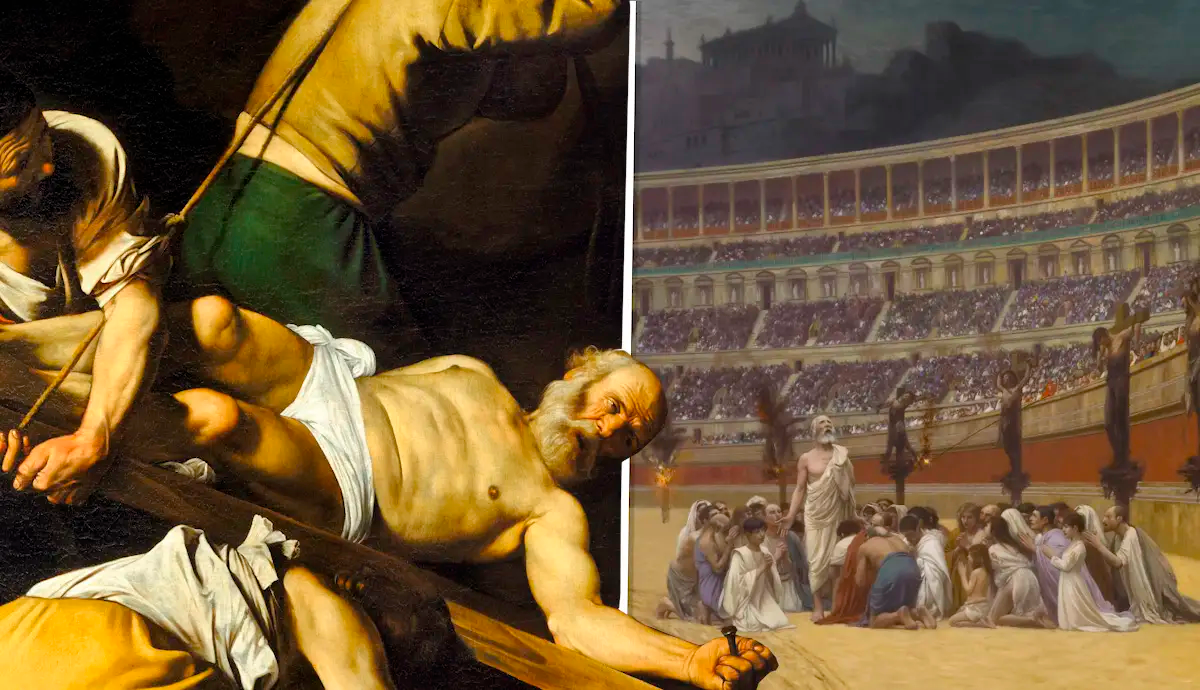
4. They believed that Christianity was a cult of blood and cannibals
Although Roman expansion was not as extensive as that of other conquerors, the Romans were not particularly cruel. They tended to respect the religious beliefs of the locals. In some cases, they even adopted the religious practices of other peoples, so it is not surprising that there are similarities between the Roman and Greek pantheons.
Why was it so difficult for the Romans to build relationships with Jews and early Christians? Part of the reason is that the Romans were annoyed by the customs of Jews and Christians. The Romans disapproved of the Jewish ritual of circumcision, considering it cruel and genital mutilation. They performed many cruel acts in honour of their gods, but even to them it seemed superfluous to remove a small patch of skin at the tip of the penis.
On the other hand, early Christians were perceived as violent and bloodthirsty cult followers who eat flesh and blood. The Romans did not understand the metaphorical meaning of the words about ‘the body of Christ’ and ‘the blood of Christ’ which are the basis for communion.
3. Body parts from gladiators were used in medicine
Oddly enough, the Romans treated many things with disdain, but not the bodies of gladiators. Roman doctors believed that eating the organs of gladiators, such as blood and liver, could help treat various diseases. They were considered particularly effective in treating epilepsy.
After gladiatorial fights were banned in 400 AD, the Romans began using the blood of executed criminals instead. This wasn't enough, however, and the passion for gladiators' body parts was reflected in Roman cosmetic treatments and even in the bedrooms. Dead skin cells that were collected after gladiators used their baths were used in face creams and as aphrodisiacs.
2. Urine was a valuable commodity
In ancient Rome, public latrines were not only places to satisfy natural needs but also important social centres. However, the large crowds created a waste problem that the Romans successfully solved by applying their engineering.
Rome created the world's first sewerage system, the Great Cloaca. It collected urine, which, because of its ammonia content, was used as a chemical for washing and tanning leather. Outside of Rome, garment cleaners collected their own urine in specially designated areas.
The business of collecting and selling urine reached such proportions that Emperor Vespasian decided to tax it between 69 and 79 AD. When his son Titus expressed his displeasure upon learning where the coins came from, Vespasian offered him a sniff of one of them. Titus said he couldn't smell it, to which the emperor replied, ‘And yet they came from urine.’
1. Roman public toilets were a cause for concern
The Romans are often remembered as a very clean people, and this is indeed true. However, this does not mean that Roman public toilets would have stood the test of time.
There were over 140 public toilets in ancient Rome. These were not just waste places, but full-fledged community centres. As mentioned, most of these toilets were equipped with advanced sewage systems that even today are impressive in their engineering.
This is where the good news ends. Archaeologists have discovered that public toilets posed a serious biohazard. Apparently, they were almost never cleaned. Archaeological findings have shown that these toilets were home to many parasites: roundworms, fleas, lice and, of course, cockroaches.
In addition, these toilets were created long before the advent of toilet paper. Public toilets had only one sponge on a stick, called a tersorium, to ‘wipe down’ after use. It was never washed.
Among other things, the sewers were home to rats and snakes. According to the records, people spent too much time in the toilet and became victims of bites in the most unexpected places. In addition, methane gas was accumulating in the toilets. It tended to accumulate under the toilets, resulting in the risk of explosion.
The situation was so serious that they found engraved spells against demons on the walls of public toilets. People were so fearful that they took statuettes of the Roman goddess of luck, Fortuna, with them when they needed to use the toilet.
Facts about the Romans
The modern world owes a lot to ancient Rome. This ancient civilization was amazingly advanced for its time. However, history often exaggerates the merits of Ancient Rome, overlooking its shortcomings.
Studying the laws and customs of the time, we realise how cruel the Romans were. Civil rights were practically undeveloped and slaves lived in terrible conditions. Ancient Rome was far from the ideal of freedom that some historians tried to impose on us.
