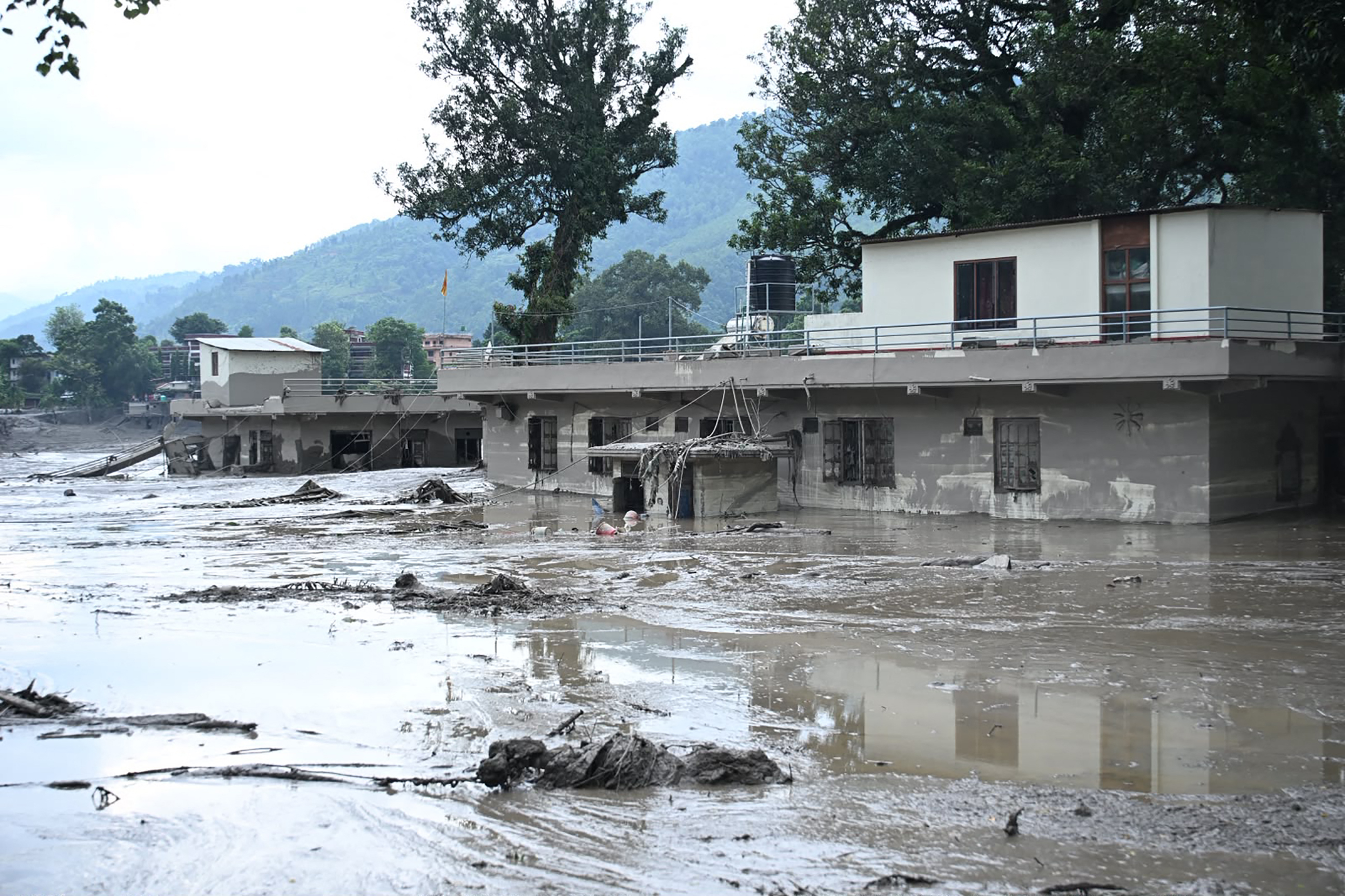
(Photo by Prakash MATHEMA / AFP via Getty Images)
What should have been a routine day for tourists, workers, and locals in the Himalayan region quickly turned into a fight for survival. Terrifying footage captured people running as a massive wall of water and debris came crashing through the Gyirong border area between Nepal and China-controlled Tibet, leaving a path of destruction behind. At least 160 people have been killed across the region, while hundreds remain missing including dozens of Americans.
Nepalese officials said hundreds of tourists and foreign nationals were unaccounted for after the catastrophic flooding swept through northern Nepal’s Rasuwa district near the Tibet border. Among those initially reported missing were 54 Americans, along with travelers from India, Australia, the United Kingdom, Canada, and several other countries. Three of the Americans were reportedly traveling with Nepal-based Fishtail Tours and Travel. The U.S. Embassy in Nepal has urged Americans in affected areas to avoid low-lying locations, seek higher ground, and follow instructions from local authorities as search-and-rescue operations continue.
The disaster devastated riverside communities and mountain corridors, sweeping away homes, businesses, roads, bridges, and other infrastructure. Nepal reported at least 157 deaths, while Chinese state media reported three deaths and hundreds missing in Tibets Gyirong County. Damaged roads, blocked routes, heavy sediment, and rugged terrain have complicated rescue efforts. Chinese President Xi Jinping called for an intensive search operation in Tibet, while Nepal deployed security forces and helicopters to evacuate survivors and search for the missing.
The cause remains under investigation. Nepals foreign minister initially said that an avalanche, possibly triggered by an earthquake, may have caused the flooding. The U.S. Geological Survey initially detected what appeared to be a 4.4-magnitude earthquake, but later clarified that the signal came from the landslide itself. Experts now believe an ice or glacier-related collapse may have unleashed the massive torrent of water and debris, underscoring the growing risks posed by increasingly unstable Himalayan glaciers and high-altitude terrain.
As families wait for word on missing loved ones, international assistance is beginning to move into the region. India has offered humanitarian supplies and essential medicines, while international relief organizations and European officials have pledged support. The European Union has also activated its Copernicus satellite service to help map the disaster zone and assist with the emergency response. Meanwhile, rescue crews in Nepal and Tibet are searching mud and debris-covered areas as officials warn the full scope of the catastrophe remains unclear.
